The Evolution of Video Asset Management How Cutsio and Mux are Revolutionizing the Filmmaking Workflow

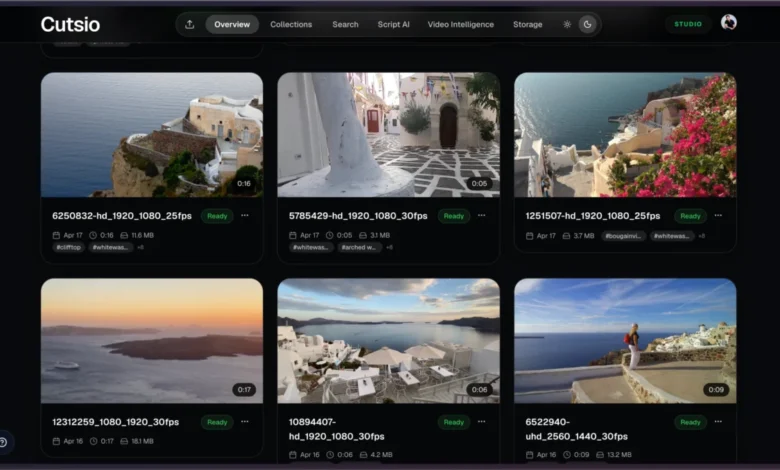
The modern filmmaking landscape is characterized by an unprecedented explosion of data, where production studios and independent creators find themselves submerged in terabytes of raw footage that grow more difficult to manage with every shoot. For professional filmmakers, the primary bottleneck in the creative process is often not the editing itself, but the labor-intensive task of locating specific moments within vast digital archives. Whether searching for a specific architectural detail, an emotional nuance in an interview, or a precise lighting condition in a wedding sequence, the traditional method of manual scrubbing through timelines is increasingly incompatible with the fast-paced demands of the industry. To address this systemic inefficiency, Cutsio has emerged as a specialized video search and delivery platform, leveraging the robust infrastructure of Mux Video, Mux Robots, and Mux Player to transform static hard drives into intelligent, searchable cloud libraries.
The Genesis of Cutsio and the Founder’s Vision
Cutsio was conceived by Rish Agarwal, a professional whose background uniquely bridges the gap between technical engineering and creative artistry. As an award-winning wedding photographer and filmmaker, Agarwal experienced firsthand the friction inherent in the post-production pipeline. The initial iteration of Cutsio was remarkably different from its current form; it was originally designed as an audio-focused tool. The platform aimed to simplify the editing process by allowing users to manipulate video content through its audio transcript. By cutting the text of a 20-minute interview, for instance, the software would automatically generate a corresponding 10-minute video edit.
While the audio-centric approach was innovative, it stopped short of addressing the visual search requirements of filmmakers. Agarwal recognized that a truly transformative tool needed to handle the visual complexities of video at scale. However, the technical barriers to entry for a solo founder in the video space were daunting. Building a scalable video platform requires sophisticated transcoding pipelines, massive server infrastructure to handle high-bitrate files, and significant engineering resources to ensure low-latency playback across various devices.
The turning point for the platform occurred during a period of technical research regarding HTTP Live Streaming (HLS) and video codecs. Agarwal encountered a series of technical deep dives on the Mux blog authored by Dylan Jhaveri, a co-founder of Mux. This discovery led to an exhaustive review of the Mux technical library, providing the roadmap necessary to pivot Cutsio from an audio utility into a comprehensive video intelligence platform.
Solving the High-Resolution Data Challenge
One of the most significant hurdles in professional video management is the sheer size of raw camera files. In the world of high-end cinematography, a single minute of raw footage can consume upwards of 5GB of storage, meaning an hour-long shoot can easily exceed 300GB. Most consumer-grade video platforms are unable to ingest these massive files without either crashing or applying aggressive compression that strips the footage of its professional quality.
During the development phase, Agarwal expressed skepticism regarding whether a cloud-based API could handle the rigors of professional-grade raw files. The assurance from the Mux team—that their infrastructure could process "anything that’s video"—became the foundation for Cutsio’s transition. Within thirty days of integrating Mux’s APIs, Cutsio evolved into a full-scale video intelligence platform capable of handling the most demanding file formats used by modern production houses.
The Architecture of Intelligence: Mux Robots and AI Integration
The core functionality of Cutsio relies on an automated workflow designed to minimize "dead time" for editors. When a filmmaker uploads a file or pastes a link into the Cutsio interface, Mux ingests the asset and triggers a series of background processes through Mux Robots. This "fire and forget" system allows the user to continue working while the platform automatically generates critical metadata.
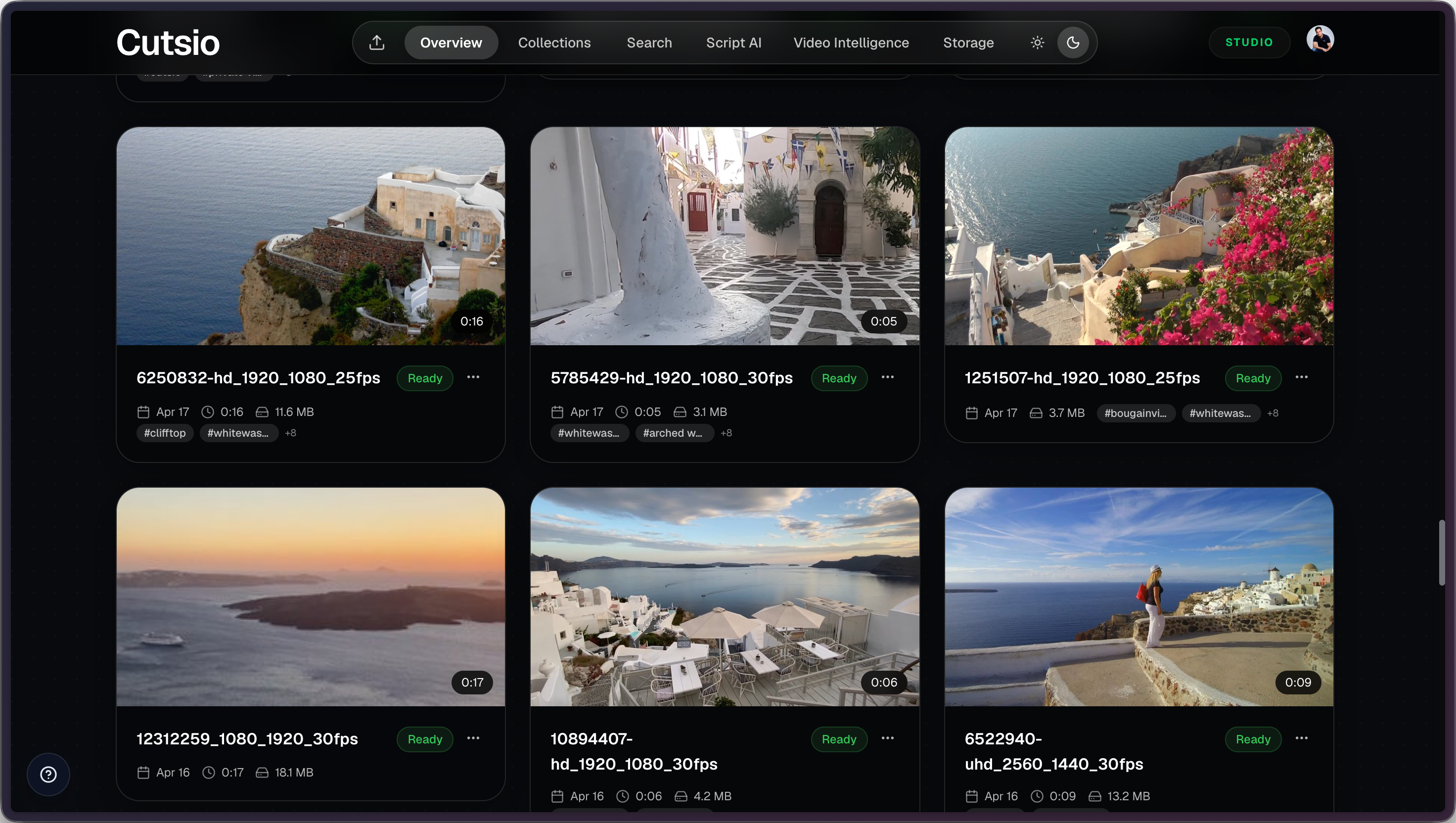
Mux Robots facilitates several key AI-driven features within the Cutsio UI:
- Automated Summarization: The system generates concise summaries of video content, allowing producers to understand the gist of a clip without watching it in its entirety.
- Tagging and Categorization: AI models identify key elements within the footage, applying relevant tags that aid in organization.
- Chapter Generation: The platform automatically identifies natural breaks in the content, creating a navigable table of contents for long-form videos.
- Content Moderation: To ensure the safety and compliance of the platform, Cutsio utilizes the "Moderate" feature of Mux Robots, which automatically detects and flags explicit content, saving the development team from building a proprietary moderation engine from scratch.
Prior to adopting Mux Robots, the Cutsio pipeline was fragmented. Agarwal had previously attempted to build a custom solution using manual transcript feeding and individual OpenAI API keys. The migration to a unified AI SDK streamlined the architecture, resulting in a system that updates the user interface in real-time as background jobs are completed.
Redefining Search: From Keywords to Semantic Understanding
The most significant advancement Cutsio offers is its move toward semantic and visual search. Standard file systems rely on filenames and folder structures, which are only as useful as the person who organized them. Cutsio, however, indexes transcripts to allow for natural language queries. A user can search for a phrase like "find all videos where I talked about LinkedIn," and the system will surface every relevant moment across an entire library, regardless of whether the word "LinkedIn" appeared in the file metadata.
Beyond text-based search, Cutsio integrates with Mixpeek to enable visual search capabilities. This allows the platform to analyze what is actually occurring on screen. By utilizing the Mux API as a connective layer, Cutsio passes assets to Mixpeek’s computer vision models without requiring the user to download or re-upload footage.
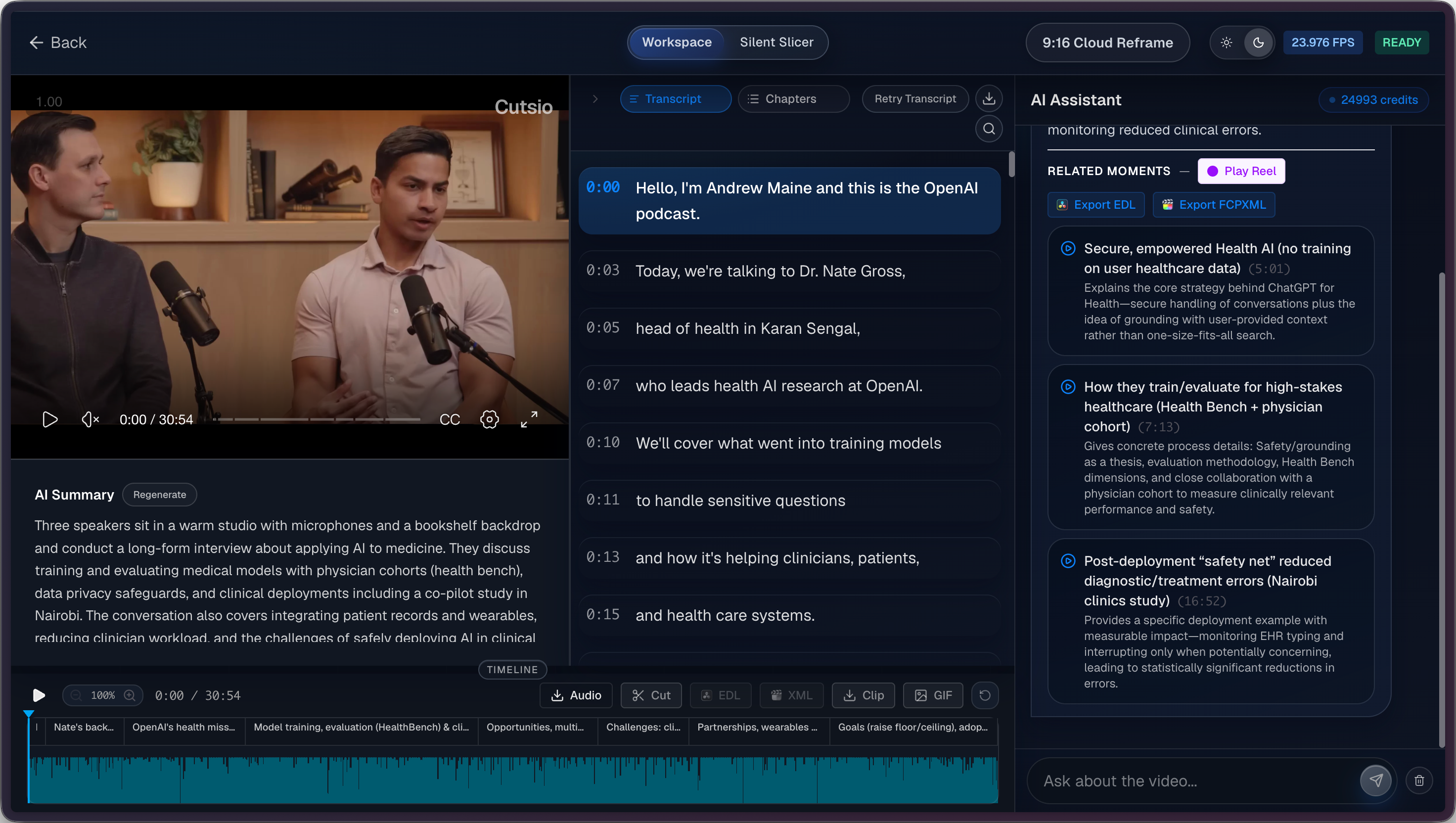
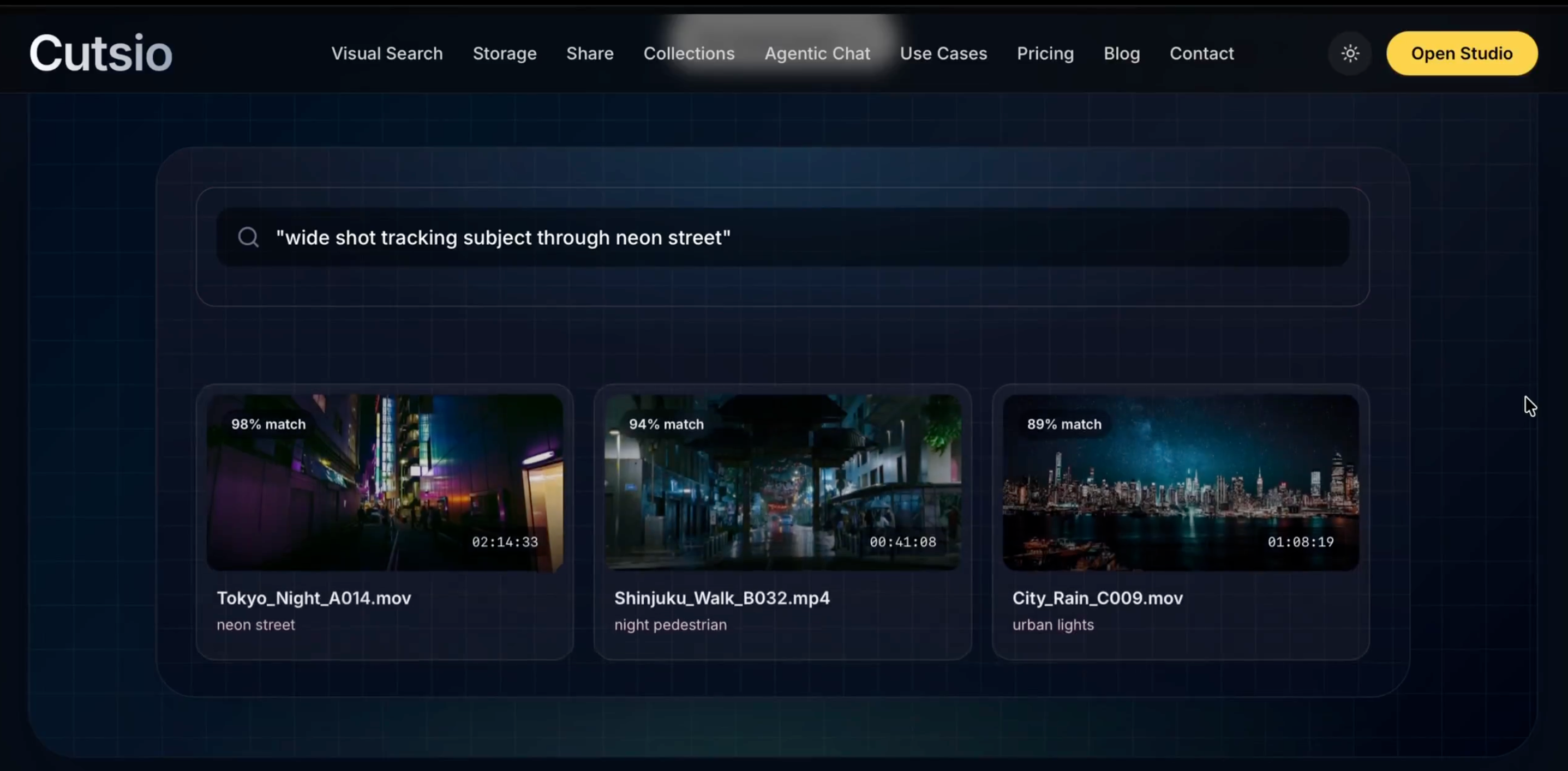
This integration enables filmmakers to search for visual motifs or emotional beats. A search for "two cars on a racetrack" or "wide shot tracking subject through neon street" yields specific frames from hours of raw footage. Perhaps more impressively, the system can identify abstract concepts like "emotional moments," surfacing clips of anger, disappointment, or joy—details that an editor might otherwise overlook during a manual review of hundreds of takes.
The Final Mile: Delivery and the Professional Viewing Experience
In the professional film industry, the presentation of the final product is as critical as the edit itself. Delivering a high-stakes project through a cluttered cloud storage link or a generic video player can diminish the perceived value of the work. Cutsio addresses this through its "Collections" feature, which provides a theater-style, private digital screening room for clients.
This experience is powered by Mux Player, which Agarwal customized using the "Sutro" theme from player.style. The goal was to provide a "chef’s kiss" viewing experience that is aesthetically pleasing and functional across all devices. For mobile users, Cutsio introduced a unique design element: a retro iPod-style scroll wheel. This custom interface allows users to navigate horizontal video on a vertical smartphone screen with precision, enabling them to seek through footage using a tactile-inspired dial located below the video player. This focus on user experience (UX) ensures that the "delivery" phase of the project is as polished as the "production" phase.
Industry Implications and Market Analysis
The emergence of platforms like Cutsio signals a broader shift in the media and entertainment industry toward "AI-assisted asset management." As the cost of high-resolution sensors drops and the volume of content creation rises, the "search problem" has become a multi-million dollar inefficiency for studios.
By offloading the heavy lifting of transcoding, AI analysis, and delivery to specialized API providers like Mux, boutique studios and solo creators can now access tools that were previously reserved for enterprise-level media conglomerates. The ability to search through raw footage with natural language and computer vision reduces the time spent in the "assembly" phase of editing by an estimated 30-50%, according to industry benchmarks for AI-integrated workflows.
Furthermore, the "headless" nature of these technologies—where the backend power of Mux is integrated into the specialized frontend of Cutsio—allows for rapid innovation. As Mux continues to update its AI models and player capabilities, Cutsio inherits those improvements automatically, ensuring the platform remains at the cutting edge of video technology.
Conclusion: The Future of the Ecosystem
The partnership between Cutsio and Mux serves as a case study in how specialized APIs can empower solo founders to disrupt established industries. By solving the "three core problems"—collection, searchability, and sharing—Cutsio has positioned itself as a vital tool for the modern filmmaker.
As Rish Agarwal noted, the delivery of video remains one of the most difficult technical challenges in the digital age. By leveraging a comprehensive ecosystem that handles everything from the initial ingest of a 300GB raw file to the final mobile-optimized playback, Cutsio allows filmmakers to spend less time managing data and more time focusing on the art of storytelling. The platform’s success underscores a fundamental reality in the current tech landscape: the most successful tools are those that hide the immense complexity of video processing behind a simple, intuitive, and highly searchable interface.